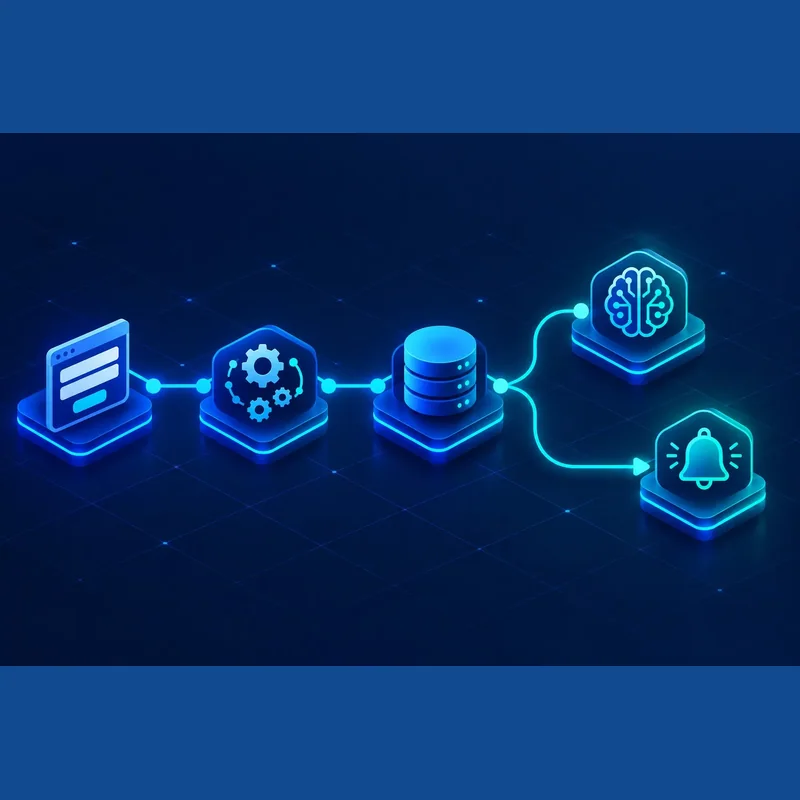
A dependable ETL pipeline that transfers your data between systems on schedule, copes with interruptions without dropping rows, and raises an alert the moment something goes wrong.
What it does
This connects the systems you already operate - database to warehouse, CRM to reporting tool, API to spreadsheet, or several of these together. Copying rows under normal conditions is the easy part; the real test is what happens on day forty, when an authentication token lapses at 2am, a source table gains a new nullable field, or a batch transfer is cut off midway.
How it is built
Extraction, loading and transformation are kept as distinct stages, since each can fail for its own reason and needs its own retry logic. Extraction tracks a cursor or watermark so that a restart picks up where it left off instead of duplicating records. Loading happens inside a transaction for each batch, so an interruption leaves the destination in a consistent state rather than half updated. Transformation logic sits in version-controlled SQL or Python rather than a drag-and-drop builder that becomes unreadable later.
Each run produces a manifest recording rows read, rows written, rows rejected and the cause of each rejection. A natural key combined with a hash makes the process idempotent, so rerunning a previous job causes no harm. Changes to source schemas are caught before they can break a load, triggering an alert instead of a silent failure.
What you receive
- Pipeline code committed to your own repository, tested against a sample of your real data.
- A scheduling mechanism suited to your stack - cron, a systemd timer, Airflow or Prefect.
- Monitoring and alerts covering row counts, failures and latency drift.
- A runbook explaining replay, backfill and how to onboard a new data source.
What we need from you
Read access to the source and destination systems, a working sample of the data, and the schedule your business actually requires rather than an ambitious one.
Timeline and updates
A first working version is typically ready within five days, including a staging run for you to review before it reaches production. Updates arrive as short written notes at each milestone rather than meetings, and decisions affecting your data - retention, backfill windows, handling of rejected rows - are recorded for later reference. If reliability cannot be reached in the available time, you are told early enough to adjust the plan rather than finding out at launch.
This build is delivered as a single fixed-price package, completed in one pass with one revision included, within a 14 day turnaround. You will need to supply the domain the order applies to and your brief.
What happens after you buy
Your order opens its own thread here the moment it is paid, and everything about that
order - questions, changes and the final report - happens in it.