- Starter - up to 3 screens, 1 platform, an early running build, source code, a setup file and 1 revision, delivered in 10 days for 150.99 USD.
- Standard - up to 6 screens across Windows, Linux and macOS, a local database, CSV/Excel import, source code, a setup file and 2 revisions, delivered in 14 days for 250.99 USD.
- Advanced - up to 10 screens, everything in Standard, plus auto-updates, installers and a release workflow, source code, a setup file and 3 revisions, delivered in 21 days for 562.99 USD.
You will need to supply the domain this order relates to and a written brief describing what you need.
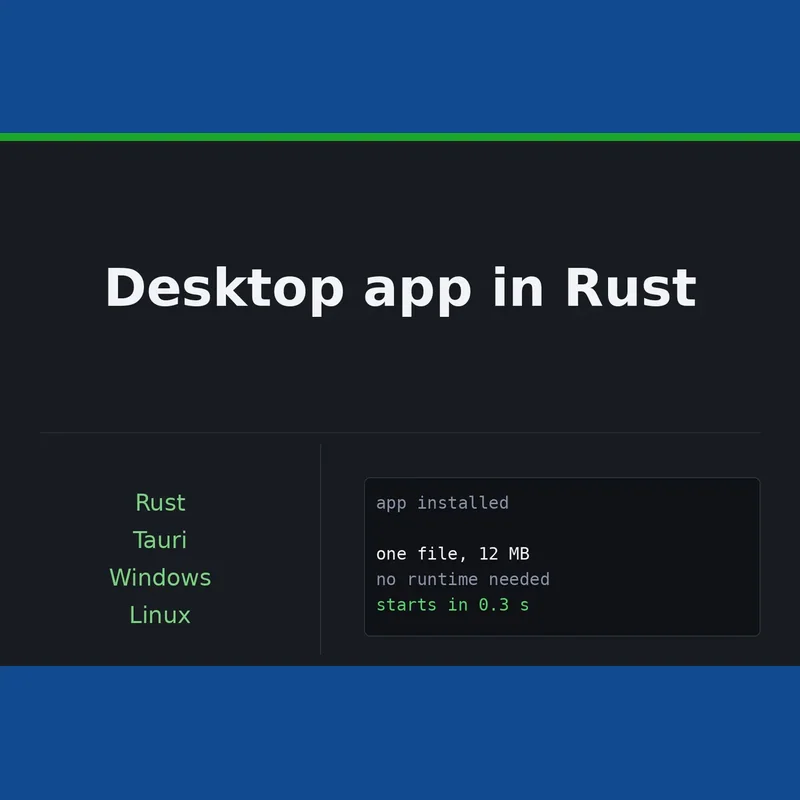
When work has to stay on a machine rather than open in a browser tab, a desktop application makes more sense than a website: files stay local, staff open it each day, and it keeps running when the network drops. We build these using Rust for the core logic, with Tauri handling the interface, so the result installs as a single compact file.
This suits small businesses and internal teams who have outgrown a spreadsheet or script and want a proper program with its own window. Rust handles the demanding tasks, such as processing large files or searching through large record sets, while the on-screen parts are built with standard web code, which keeps future screens quick to add.
The Starter tier covers one application with up to 3 screens for a single platform of your choosing, with a working build produced early and the source code placed in your own repository. Standard extends this to 6 screens and adds packaged builds for Windows, Linux and macOS, together with a local SQLite database that supports search, plus import and export in CSV or Excel formats. Advanced raises the screen count to 10, keeps everything from Standard, and adds automatic updates, per-platform installers and a release workflow that builds new versions whenever you push a tag.
Common uses include internal tools that read and write files in a shared folder, or viewers for data your team already keeps in CSV files or a database. Should the brief expand once work is underway, we quote any extra screen before starting it, whether as an add-on or a separate order.
On the interface side, you get a clean, standard look by default, or your own mockups and brand colours if you provide them.
What is not covered: games, mobile apps, anything that must run inside a browser tab, or copies of existing commercial software.
You own the code outright. Every tier comes with the full source in your repository, free for you to change, reuse or pass on to another developer. Once delivered, anything not working as agreed is fixed at no extra cost.
Our background is in IT, working in Rust, with public work that includes an open-source Rust HTTP library on crates.io featuring a full test suite and continuous integration.
You get written progress notes on each working day, quick responses, and no calls.
How the project runs
1. Scope agreed in writing - we confirm the screen list, data formats and tier before writing any code. A screen means one window or view the user interacts with.
2. First screen delivered as a working build - the app shell with its first screen fully working on your actual data, so you can test early and adjust direction while changes are cheap.
3. Remaining screens built with tests - each additional screen comes with tests for its underlying logic, with a short written update on every working day for longer builds.
4. Builds, database and installers - platform builds matching your tier, the local database and import/export on Standard, plus automatic updates and installers on Advanced.
5. Handover through your repository - source code delivered with written notes covering how to build it, run the tests and ship future updates.
What happens after you buy
Your order opens its own thread here the moment it is paid, and everything about that
order - questions, changes and the final report - happens in it.